TOWARDS NOWHERE
The Archaeology of a Non-Place
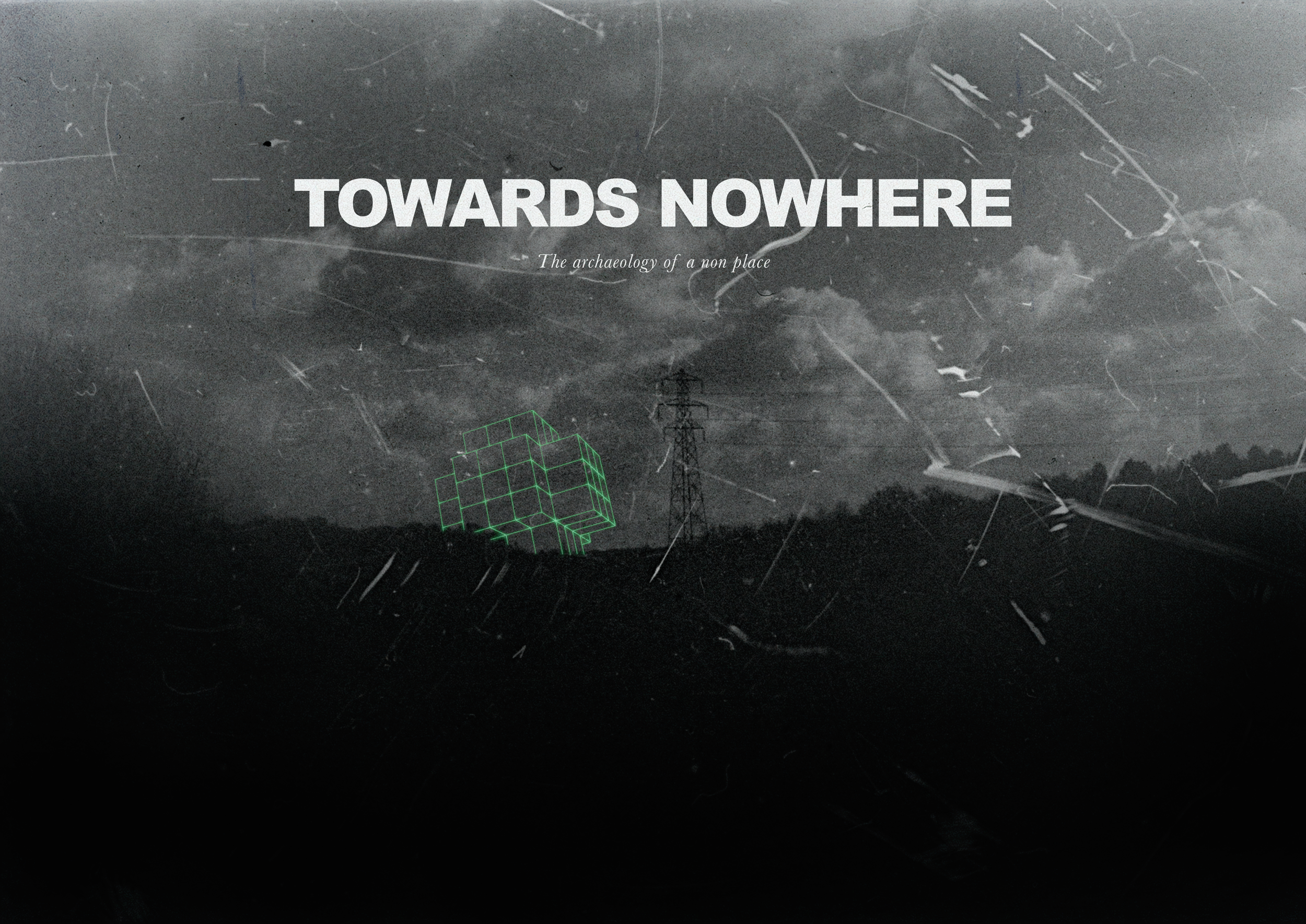
Test edit made from development material.
TOWARDS NOWHERE
16mm film installation. St Albans, 2026.
Somewhere beneath the ordinary surface of contemporary St Albans, in the concrete shadow of motorway underpasses, electricity pylons, and the silence of derelict retail units, a hidden world once existed. A community with its own way of living, its own customs, now lost and forgotten. But something remains in the cracks and decay. Something that wants to be discovered.
In 1626, on his estate in St Albans, Sir Francis Bacon imagined a utopian society deliberately concealed from the world. Four hundred years later, Towards Nowhere relocates that vision to modern overlooked margins of the same area; disused office buildings, motorway intersections, electricity pylons beside filled quarries, all conceived as the traces of a forgotten experiment in living.
Captured on 16mm film, the work presents itself in part as a speculative documentary archive: rediscovered footage of a community that once existed in these liminal spaces. A solitary traveller moves through these environments, encountering masked figures in ritual costumes, remnants of a society that has not survived. Field recordings by sound artist Alex Hyland conjure the imagined aural culture of this lost utopia. Costumes and masks are designed by artist Amina Pagliari. Passages from Bacon's New Atlantis surface within the work, moving between documentary observation and speculative fiction without resolving whether the material records reality or imagination. This can be seen in the test film opposite, built from the early development work and tests made during and after my recent DYCP, Developing an Analogue Artist Film Practice for (Towards) Nowhere.
The imagined community is shaped with people whose own experience of being overlooked gives the work its charge. Workshops on utopia, shelter and belonging, facilitated by writer Anna Reynolds with Emmaus and HACRO, feed into the world the film builds. A walk through the overlooked sites of St Albans produces the photographs that line the exhibition. Participants are invited to appear on screen as the film's masked figures.
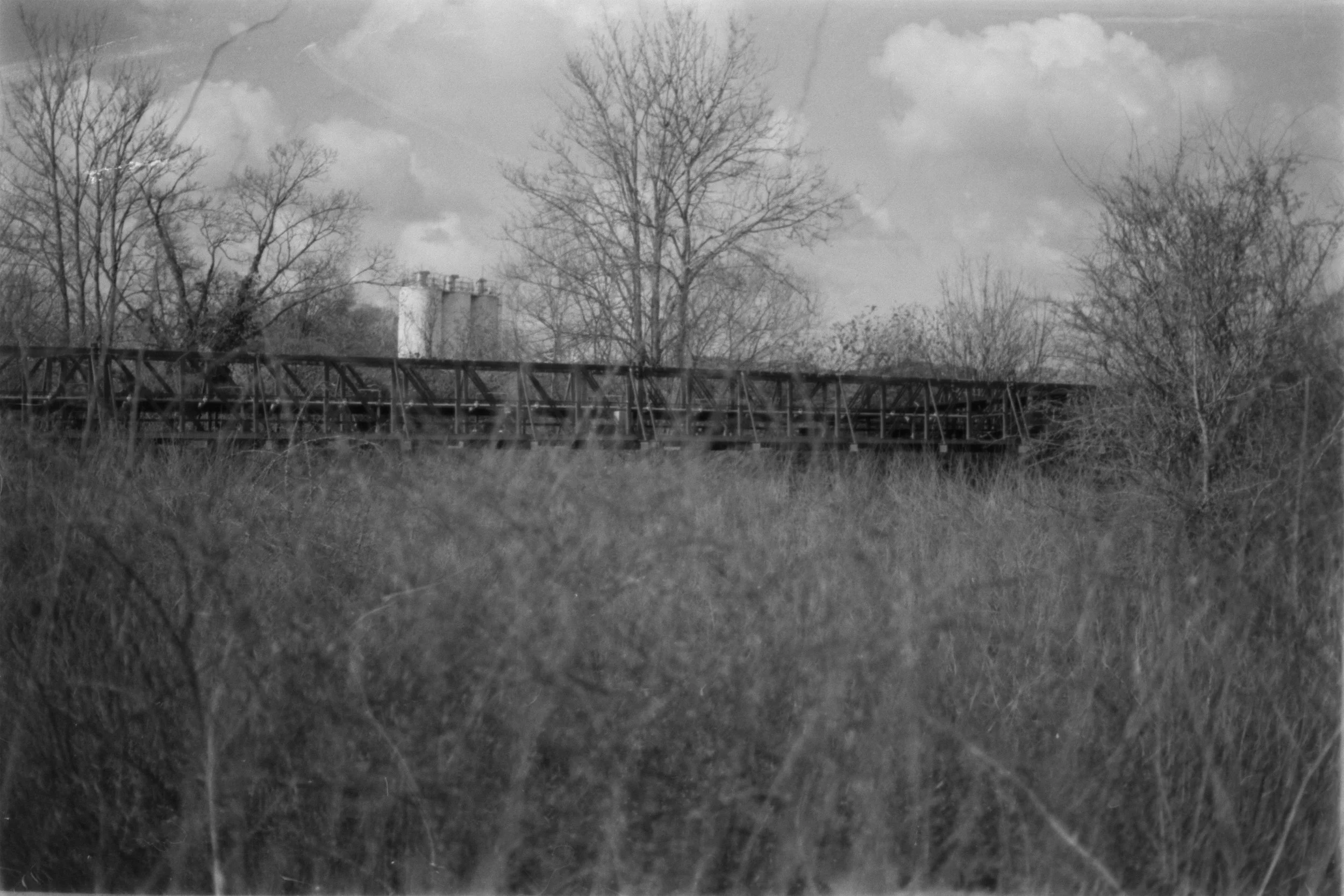
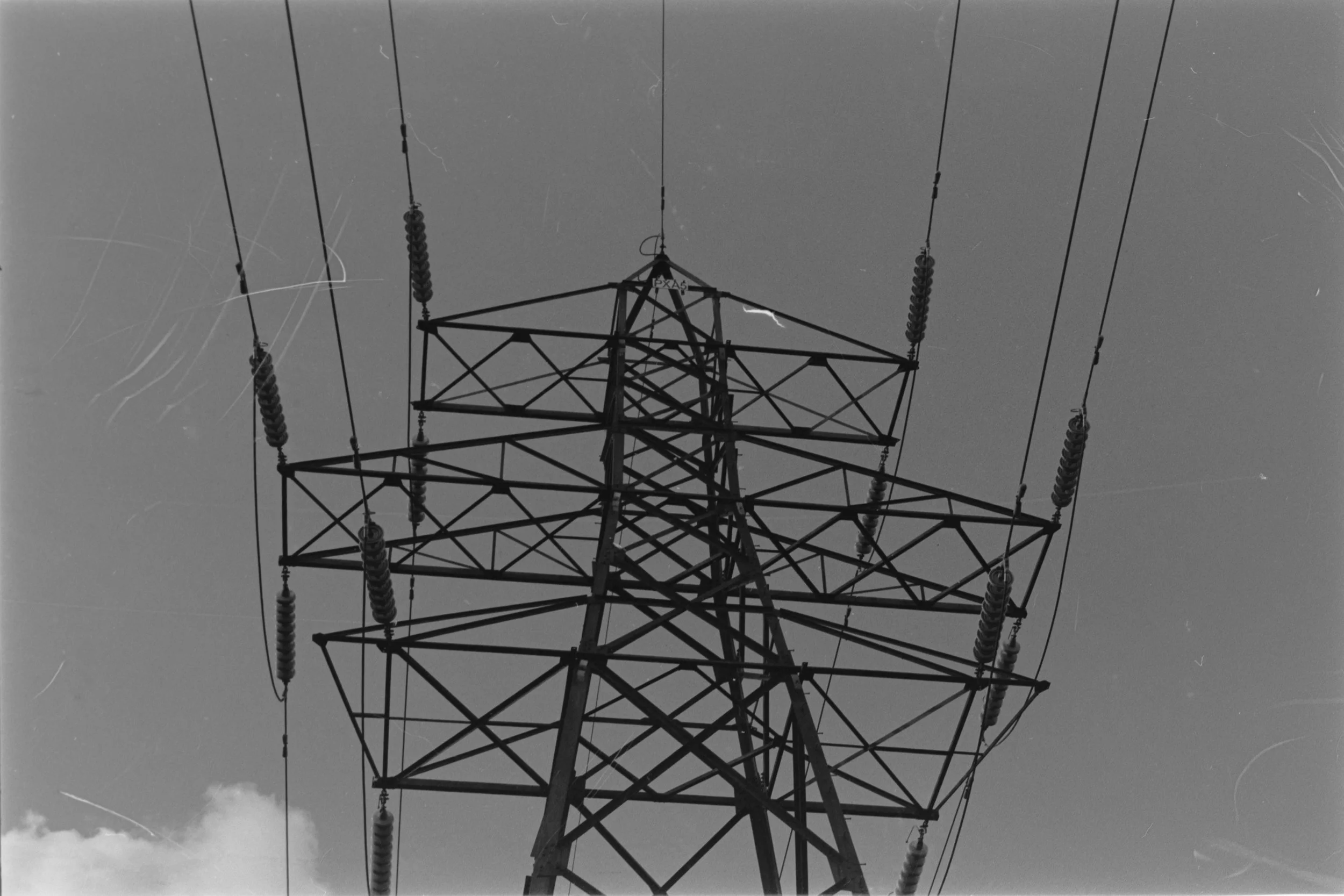
The work is shown in an empty civic space among the retail units of central St Albans. Inside, hand-processed 35mm photographs line the walls: an electricity pylon as sentinel, the brutalist arch of a motorway underpass, fauna pressing back through concrete. The sound of the film drifts through from somewhere deeper in the building. At the back of the room, a door stands open. A small, darkened screening space. Benches. At the far end, the film plays.
What remains when a community vanishes? What traces might we find? Standing among these overlooked places today, we are asked: how do we want to live together now?
Part of Bacon 400, the official programme marking the 400th anniversary of Francis Bacon's death.
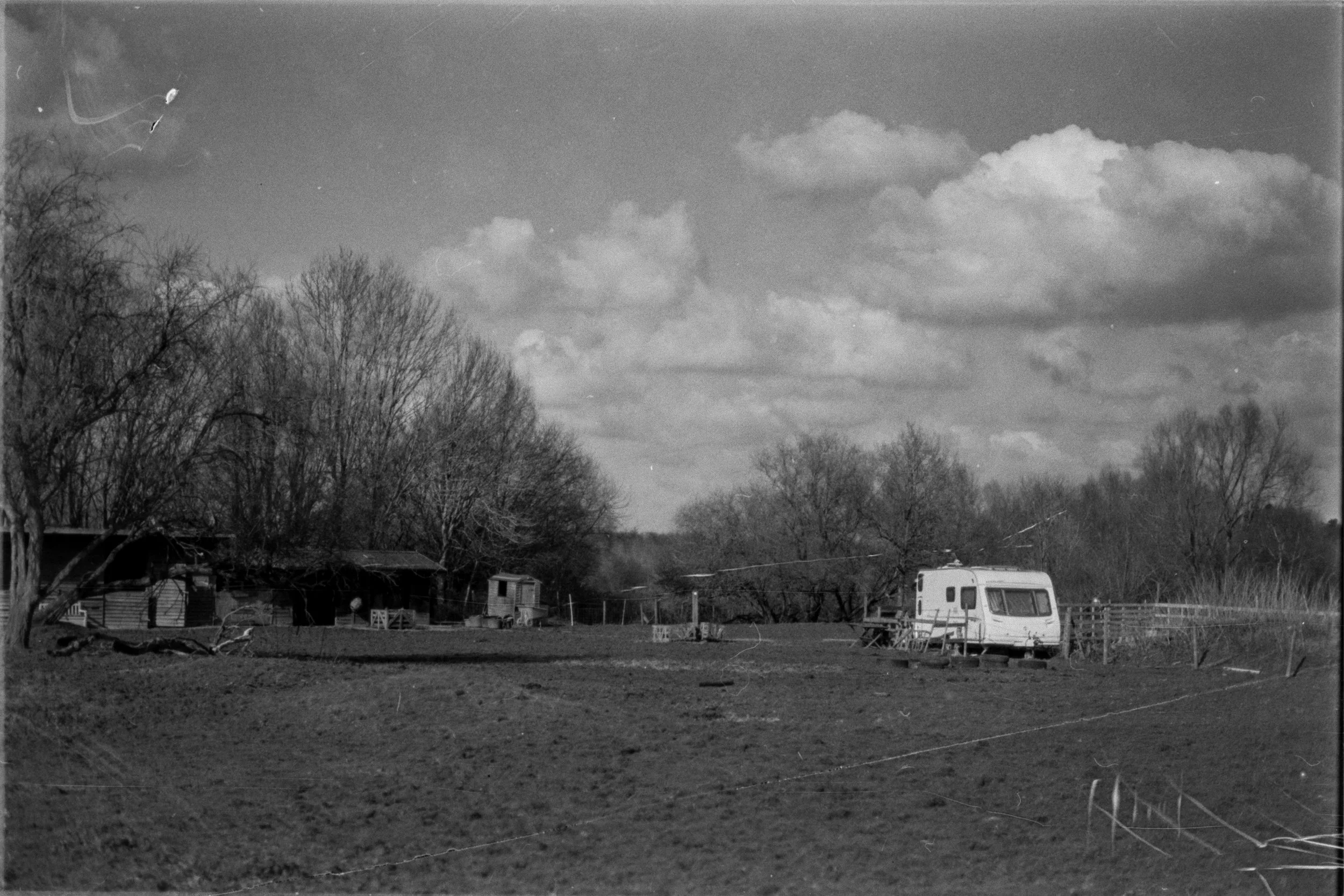
MOOD BOARD - THE SINGLE SCREEN FILM
DEVELOPMENT SO FAR
Towards Nowhere has been in active development since the completion of a funded DYCP (Developing Your Creative Practice) grant, which supported mentorship with James Holcombe at Erewhon Experimental Film Labs and artist filmmaker John Smith, building core skills in 16mm operation, in-camera effects and darkroom practice.
Location recces and 16mm shooting have taken place at the M25/M1 intersection between St Albans and Bedmond, capturing motorway underpasses, electricity pylons and infrastructural margins, with further tests at Tyttenhanger quarry. Several reels of 16mm have now been shot and processed, including hand-processed colour tests using a developer recipe adapted from a Second World War formula, with a further roll processed and worked on since the project was last developed in early 2026.
A test edit (see above) has been assembled, portraying a solitary figure moving through these overlooked spaces. It carries test recordings of the imagined utopian community, voiced using original text written by Matt Smith alongside excerpts read from Bacon's own New Atlantis, beginning to establish the tone of the work. Everything seen in the test film is original and has been made specifically in developing this project.
Field recording tests have been made and can be heard in the test film: the metal of a bridge and pylon, the slow drone of passing cars, layered and mixed. Working with sound artist Alex Hyland, Matt has recorded a test sound design session using this material as samples, alongside found scraps of audio and feedback, laying the foundation for the work's sound world. A fuller recording and installation methodology is in active development: geophones mounted directly onto electricity pylons and motorway bridges to capture structural resonance, alongside conventional field recording. In the installation, sound will be delivered through exciters mounted on flat panels, making the surfaces themselves the speakers.
Costume and installation design conversations have begun with artist Amina Pagliari. 16mm cameras have been tested on motion-controlled sliders, and a matte box setup for in-camera compositing is ready to be built. Work has also begun on how an installation built for an earlier project can be repurposed to construct the inner screening room within the unused building.
Since the last stage of development, strong partnerships have been formed with Emmaus and HACRO, who will join the project's development. Workshop ideas with their participants will help shape the imagined community, with the chance for some to become the masked remnants of that community in the final film. Alongside this, a psychogeographic walk through the proposed overlooked spaces has been developed, exploring what these sites could mean, recording sound and taking the 35mm photographs that will appear in the final exhibition.
Conversations have also begun with Joanna Duncombe (British Council) and Kat Haylett (Independent Cinema Office) about the work's onward life in film festivals, heritage sites and exhibitions.
Artist filmmaker Ben Rivers, whose practice closely aligns with the concerns of Towards Nowhere, generously met with Matt to discuss thematic approaches, bringing an important critical perspective to the development of the work.
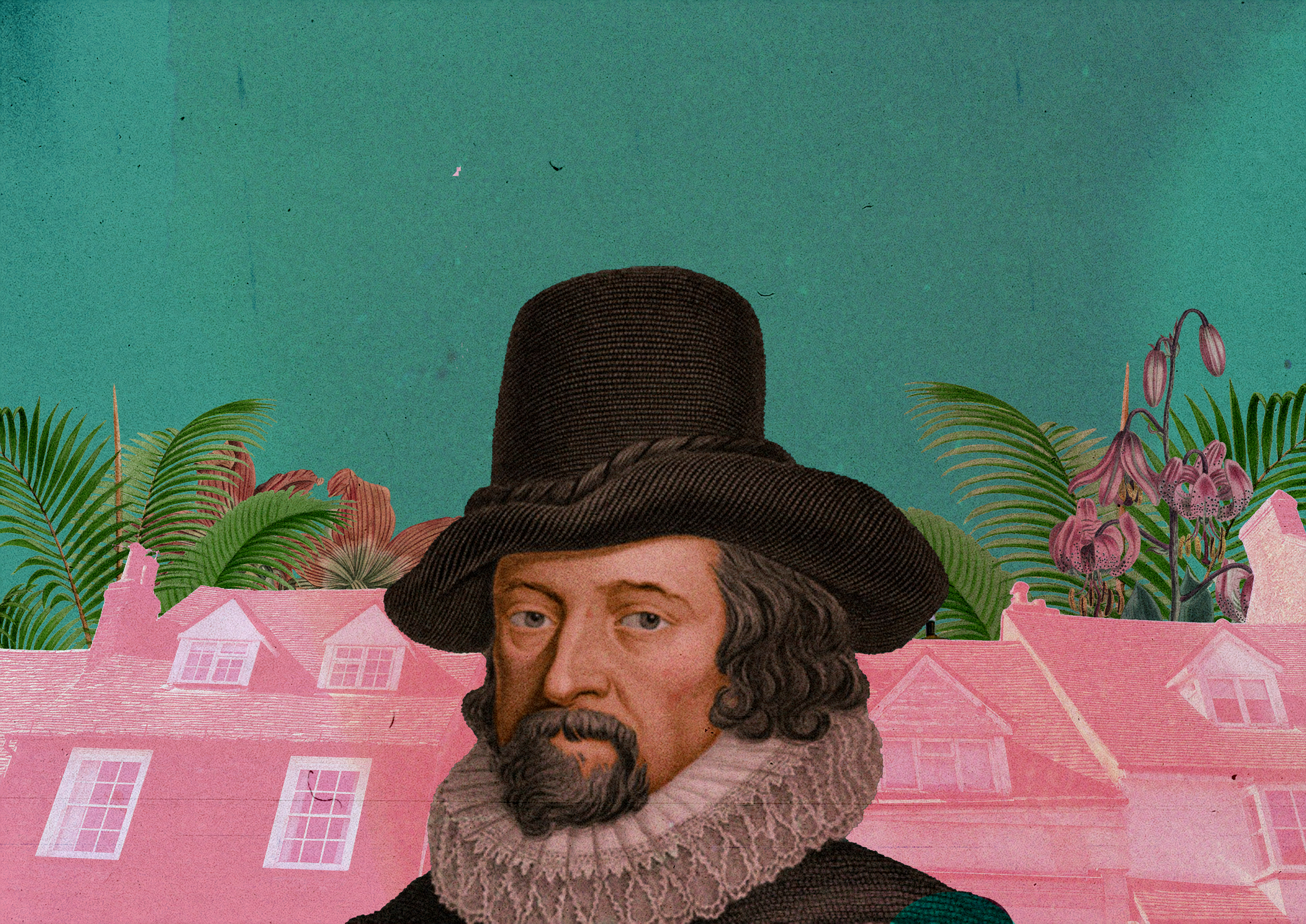
MOOD BOARD - THE INSTALLATION
FRANCIS BACON, NEW ATLANTIS & TOWARDS NOWHERE
Sir Francis Bacon, philosopher, statesman and a founding figure of the scientific method, lived at Gorhambury on the edge of St Albans and was buried, in 1626, at St Michael's Church in the city. He was the first and last Viscount St Alban.
Lawyer, scientist, courtier and writer, Bacon rose to become Lord Chancellor of England before a charge of corruption ended his public career in 1621 and banished him to his St Albans estate. Those final years, removed from court, proved the most productive of his life. It was at Gorhambury that he finished New Atlantis, the work this project takes as its source.
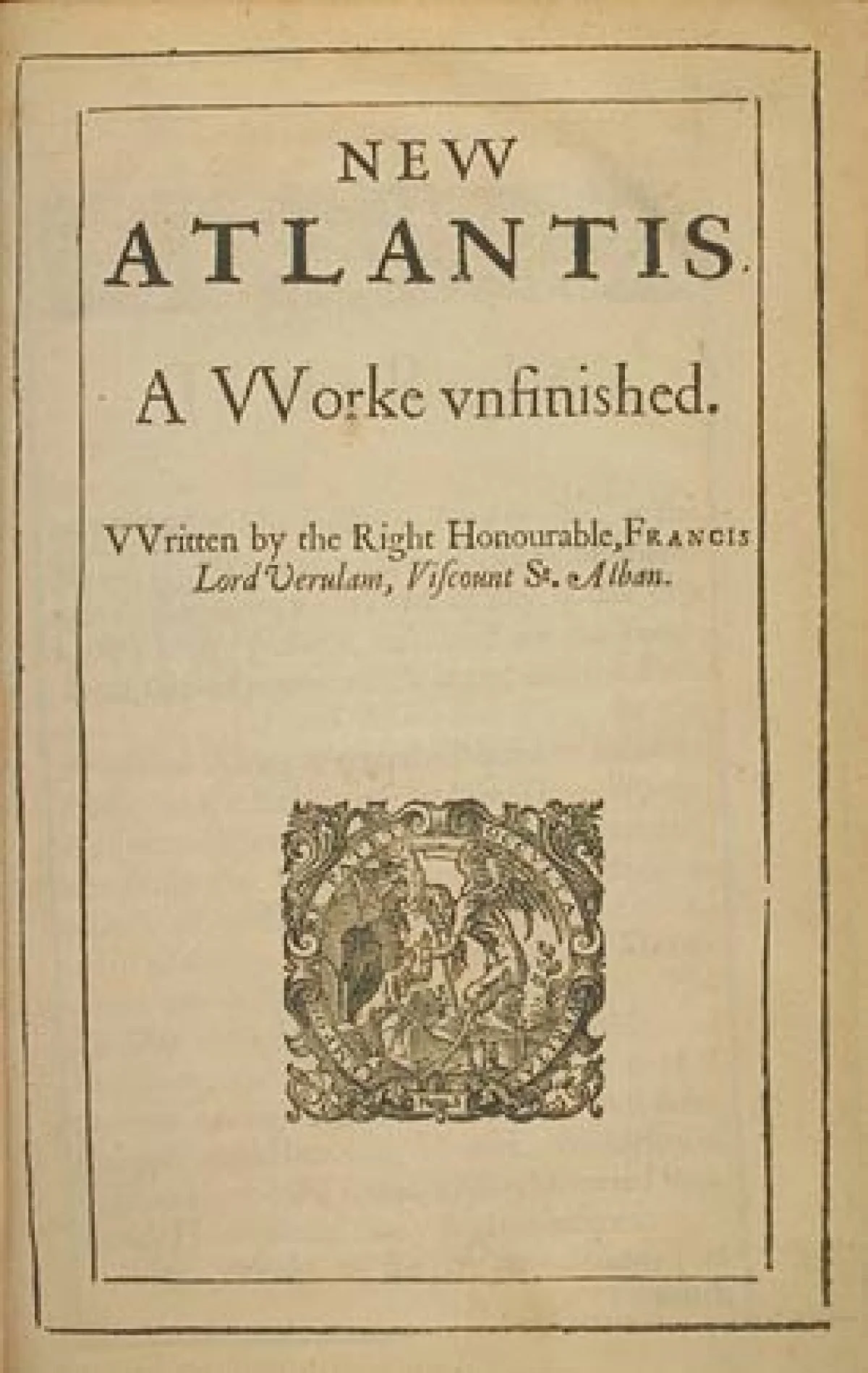
Among Bacon's works, New Atlantis is an unfinished utopian narrative published the year of his death. In it, a ship blown off course discovers Bensalem, an island society deliberately concealed from the world, governed by knowledge and ordered toward the common good. At its centre is Salomon's House, an institution devoted to understanding nature, an imagined community whose influence ran far beyond the page: it helped inspire the founding of the Royal Society decades later.
Towards Nowhere takes Bacon's central idea, a utopia hidden within the ordinary world, and carries it into the present, asking where such communities might be imagined now, and what would remain of them once they were gone.
The project's title reaches back to the root of the word utopia itself, coined by Thomas More in 1516 from the Greek for "no place." A utopia is, by definition, nowhere. Towards Nowhere moves through the overlooked spaces of a real city in search of it.
BACON400
2026 marks the 400th anniversary of Francis Bacon's death. As his home and final resting place, St Albans is the focal point for the commemorations, an international programme of lectures, exhibitions, services and community events. Bacon 400 is coordinated by the Parish of St Michael's and the Francis Bacon Society, with partners across the city including St Albans Museum + Gallery and the St Albans Arts Team.
Towards Nowhere is part of this programme. Rather than historical tribute, it uses Bacon's least familiar major work to ask living questions, about community, civic space, and how we want to live together now, connecting four hundred years of local history to the present moment.
WHY NOW
The question the work asks is not abstract. Across the country, high streets are hollowing out, civic buildings stand empty, and the shared spaces that once held communities together are quietly disappearing. To stage a work about a vanished community inside an empty retail unit is to ask, directly, what these overlooked spaces are for now, and what else they could become.
That question has the most force when it is asked with the people most often overlooked themselves. Emmaus and HACRO, now confirmed partners, bring the voices of people who have experienced homelessness and the criminal justice system into the heart of the work. St Albans is among the least deprived districts in England, an affluence that makes its inequalities easier to overlook. A work about overlooked places, made with people whose lives are shaped by being overlooked, carries a particular charge in a town like this. Their perspectives on shelter, belonging and what a better way of living might look like shape the imagined community at its centre, and some will appear within it.
This is familiar ground. The Invisible People (2019), made with people experiencing homelessness in derelict spaces around St Albans, reached over 1,100 viewers and proved the value of this way of working: place-led, voice-led, presence without exposure. Towards Nowhere carries that approach into 16mm, and into Bacon's four-hundred-year-old question about how we might live together.